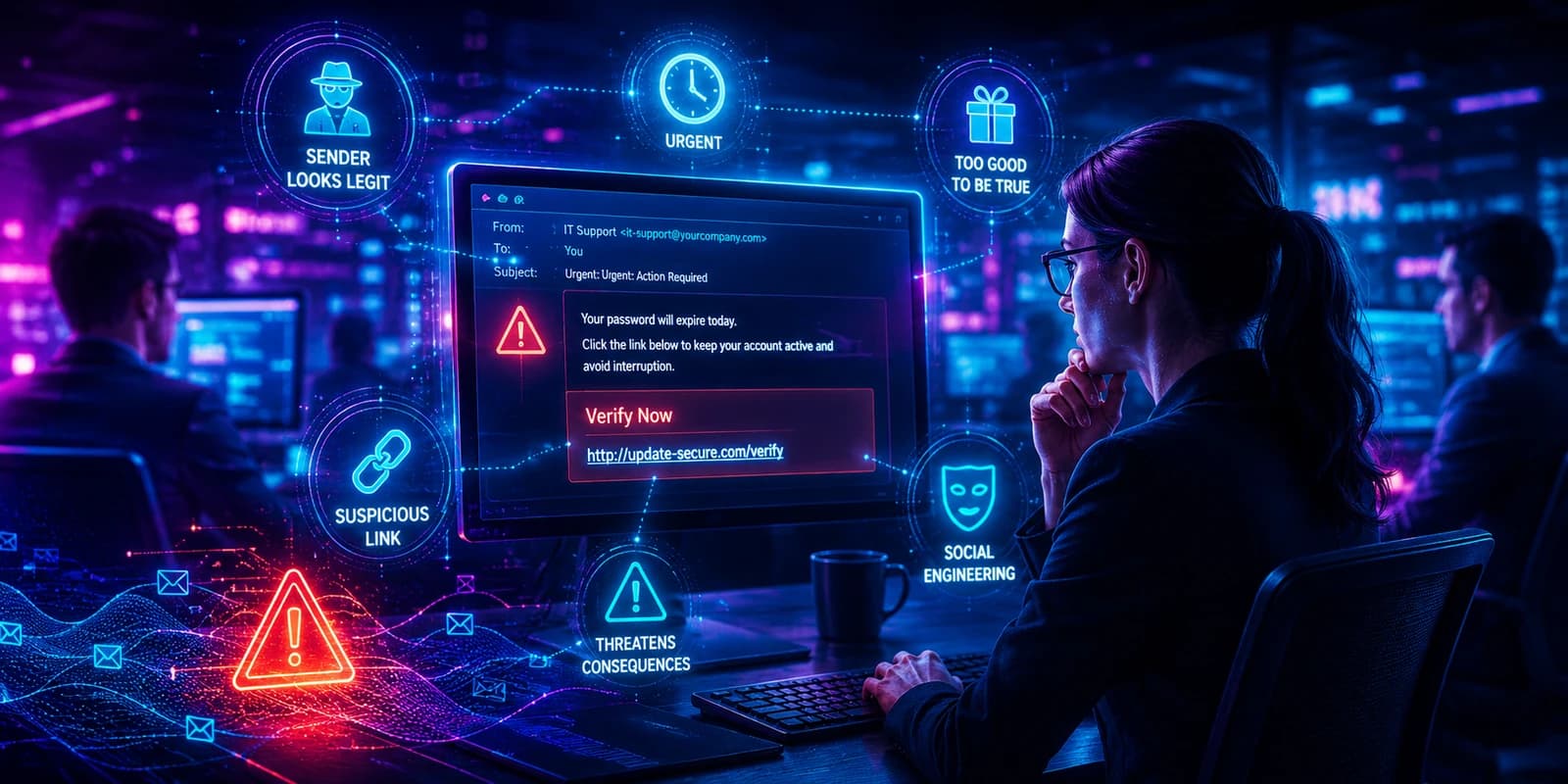
If your organization runs phishing simulations, you've probably noticed something frustrating: the same employees keep clicking, and overall click rates plateau after the first few campaigns. The annual compliance video isn't changing behavior. The question isn't whether your employees are the problem — it's whether your training approach is.
Why Traditional Training Fails
Most security awareness programs follow the same pattern: an annual training module, a quiz, a certificate. The organization checks the compliance box and moves on for another year.
The problem is that phishing attacks don't happen once a year. They happen every day, they evolve constantly, and they exploit human psychology in ways that a 30-minute video cannot address.
Common failure patterns include:
- One-size-fits-all training that doesn't account for different roles and risk levels
- Annual-only cadence with no reinforcement throughout the year
- Generic examples that don't reflect the specific threats targeting your organization
- No consequences or incentives tied to behavior
- Testing that measures knowledge retention, not actual behavior change
What the Data Shows
Organizations that measurably reduce phishing risk share several characteristics:
Frequent, Short Training Beats Annual Deep Dives
Monthly micro-training sessions (5–10 minutes) produce better behavior change than annual hour-long sessions. Frequency matters more than depth because phishing resistance is a skill that requires regular practice.
Simulations Must Be Realistic
Generic "you've won a prize" simulations train employees to spot obvious fakes — but modern phishing attacks impersonate internal executives, reference real projects, and mimic legitimate business workflows. Your simulations should reflect the actual threats your organization faces.
Role-Based Targeting Matters
Your finance team faces different phishing threats than your marketing team. Wire transfer fraud attempts target finance. Credential harvesting targets IT. Executive impersonation targets administrative assistants. Training should be tailored to the specific attack scenarios each role is most likely to encounter.
Immediate Feedback Changes Behavior
When an employee clicks a simulated phish, the most effective intervention is immediate, specific feedback: what they missed, why this email was suspicious, and what to do next time. Delayed feedback (a report three weeks later) has minimal impact.
Positive Reinforcement Outperforms Punishment
Organizations that reward reporting of suspicious emails see higher reporting rates and lower click rates than organizations that punish clicks. Create a culture where reporting is encouraged and clicking is treated as a learning opportunity.
Building an Effective Program
A practical phishing resilience program includes:
- Baseline measurement — Run an initial simulation campaign to establish your current click rate and identify high-risk groups.
- Role-based training — Deliver training tailored to the specific threats each department faces.
- Monthly simulations — Run realistic simulations at least monthly, varying the techniques and difficulty.
- Immediate feedback — Provide real-time coaching when employees interact with simulated phishing.
- Reporting mechanism — Give employees an easy way to report suspicious emails (a "report phish" button).
- Metrics tracking — Track click rates, report rates, and time-to-report over time to measure actual behavior change.
- Quarterly review — Adjust training content and simulation scenarios based on emerging threats and your organization's data.
What "Good" Looks Like
Industry benchmarks suggest:
- Initial click rates typically range from 15–30% before training
- Mature programs achieve sustained click rates below 5%
- Report rates should exceed click rates (employees report more than they click)
- Time to achieve meaningful improvement is typically 6–12 months of consistent effort
The goal is not zero clicks — humans are fallible, and sophisticated attacks will occasionally succeed. The goal is to build a culture where employees are your first line of detection, not your weakest link.
The Compliance Connection
For organizations subject to FTC Safeguards, GLBA, HIPAA, or cyber insurance requirements, documented security awareness training is not optional. But checking the compliance box with ineffective training is worse than useless — it creates a false sense of security while leaving your organization exposed.
Invest in training that actually changes behavior. Your employees interact with potential threats every day. Make sure they're equipped to recognize them.